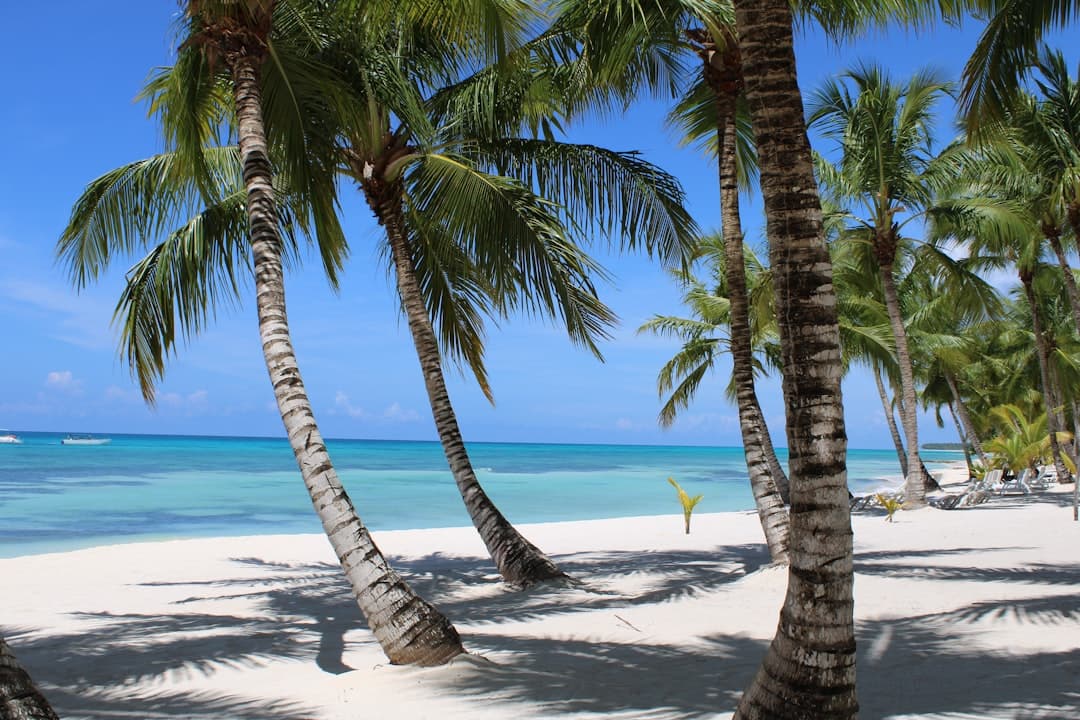
The Dominican Republic, occupying the eastern two-thirds of the island of Hispaniola, possesses one of the most geographically diverse coastlines in the Caribbean. Beyond the heavily developed resort zones of Punta Cana and Puerto Plata, large sections of the country's coastline remain accessible only by unpaved roads or local boat services.
Samaná Peninsula
Located in the northeastern corner of the country, the Samaná Peninsula is home to beaches such as Playa Rincón, which has appeared on multiple international lists of Caribbean destinations with limited commercial infrastructure. The surrounding waters fall within the Samaná Bay, a marine area recognized for seasonal humpback whale migration between January and March. Access to several beaches in this region requires four-wheel-drive vehicles or arrangements with local boatmen operating from the town of Las Galeras.
The Southern Coast and Barahona
The southwestern province of Barahona borders the Sierra de Bahoruco mountain range and the Jaragua National Park, a protected area that forms part of a UNESCO-designated biosphere reserve. The coastline here features dark-sand beaches fed by mineral-rich sediment from the surrounding mountains, a characteristic uncommon in the broader Caribbean region. The area receives a fraction of the international tourist traffic recorded in the country's eastern zones.
Playa Frontón and Remote Access Points
Playa Frontón, situated near Cabo Cabrón on the Samaná Peninsula, is reachable only by sea and remains without permanent commercial facilities. The cliffs surrounding the bay are composed of limestone formations consistent with the karst topography found across much of the island's northern coast.
The Dominican Republic's Ministry of Tourism has in recent years promoted diversification beyond all-inclusive resort tourism, with particular attention to ecotourism corridors in the south and southwest. Infrastructure development in these areas remains limited compared to the established tourist zones.
Open Questions
Whether expanded road access and accommodation development in remote coastal areas will alter their current character remains an open question for conservationists and local communities alike. The balance between economic development and preservation of undisturbed ecosystems continues to be debated among regional planners.
Sources: Dominican Republic Ministry of Tourism (turismo.gob.do), UNESCO Man and Biosphere Programme, Jaragua-Bahoruco-Enriquillo Biosphere Reserve documentation, Caribbean Tourism Organization regional reports.
This article is based on a verified primary source. The text was editorially reviewed and fact-checked prior to publication.