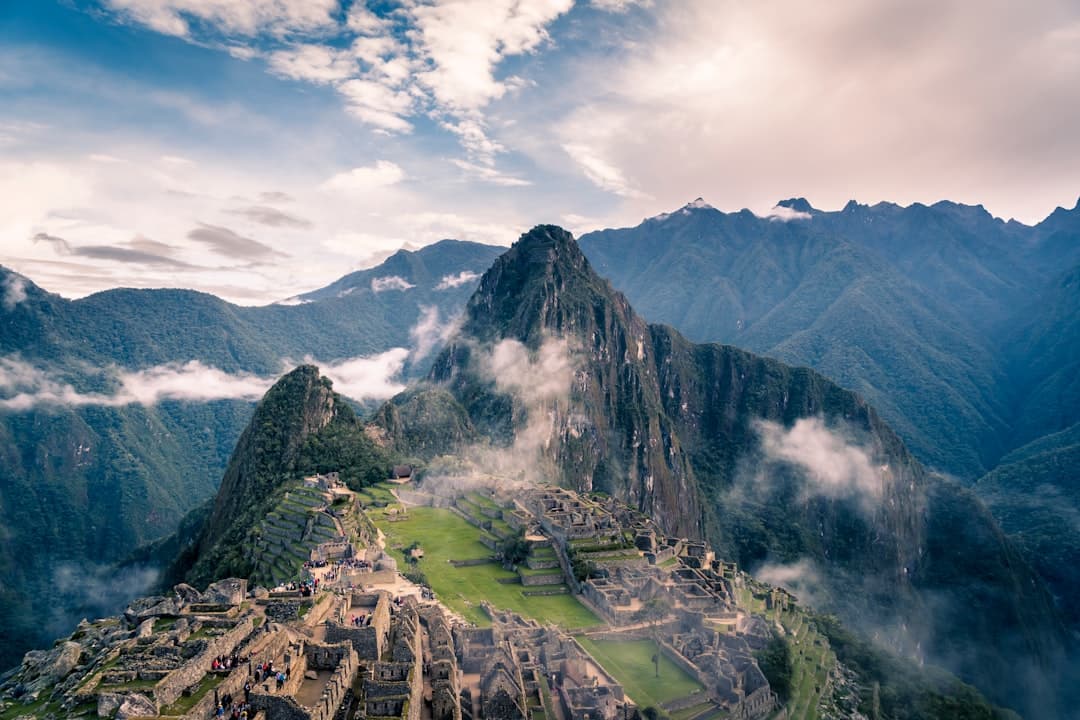
Peru occupies a geographic position that produces one of the most varied landscapes on the planet. The country spans three distinct natural zones — the coastal desert strip known as the Costa, the Andean highlands called the Sierra, and the vast Amazonian basin referred to as the Selva — each containing destinations that remain relatively unknown outside specialist travel communities.
The Colca Canyon Region
Located in the Arequipa region of southern Peru, Colca Canyon ranks among the deepest canyons on Earth. The canyon walls shelter traditional Andean villages where agricultural terracing, some of it pre-Inca in origin, remains visible along steep slopes. The area also serves as a natural habitat for the Andean condor, which can be observed riding thermal currents above the canyon rim at Cruz del Condor viewpoint.
The Huacachina Oasis
In the Ica Desert along Peru's southern coast, a natural lagoon surrounded by sand dunes forms the Huacachina oasis. The site represents one of the few naturally occurring desert oases in South America. Dune formations in the area reach substantial heights, attracting visitors who engage in sandboarding and dune vehicle excursions.
The Gocta Waterfall
Located in the Amazonas region of northern Peru, Gocta waterfall drops in two cascades through cloud forest terrain. The falls were documented in international scientific literature only in the early 2000s, though local communities in the area had long been aware of their existence. Access requires a multi-hour trek through forested hillside paths.
The Floating Islands of Lake Titicaca
Lake Titicaca, situated on the Andean plateau at an elevation that makes it one of the highest navigable lakes in the world, contains the Uros floating islands. These islands are constructed from totora reeds harvested from the lake itself and have been maintained by the Uros people for generations as both habitation and cultural practice.
Peru's national tourism promotion body, PromPerú, actively works to diversify visitor destinations across all three geographic zones, directing attention toward regions beyond the well-established Inca Trail corridor.
Open Questions
Whether infrastructure investment in remote regions will keep pace with rising visitor interest remains an active concern among conservationists and local community organizations. The balance between economic development through tourism and environmental preservation continues to be evaluated by Peruvian authorities.
Sources: PromPerú (Peru's Commission for the Promotion of Exports and Tourism), UNESCO World Heritage documentation, Smithsonian Magazine geographical records, National Geographic travel archives.
This article was compiled with the support of advanced research technology, based on multiple verified sources, and reviewed by our editorial team.