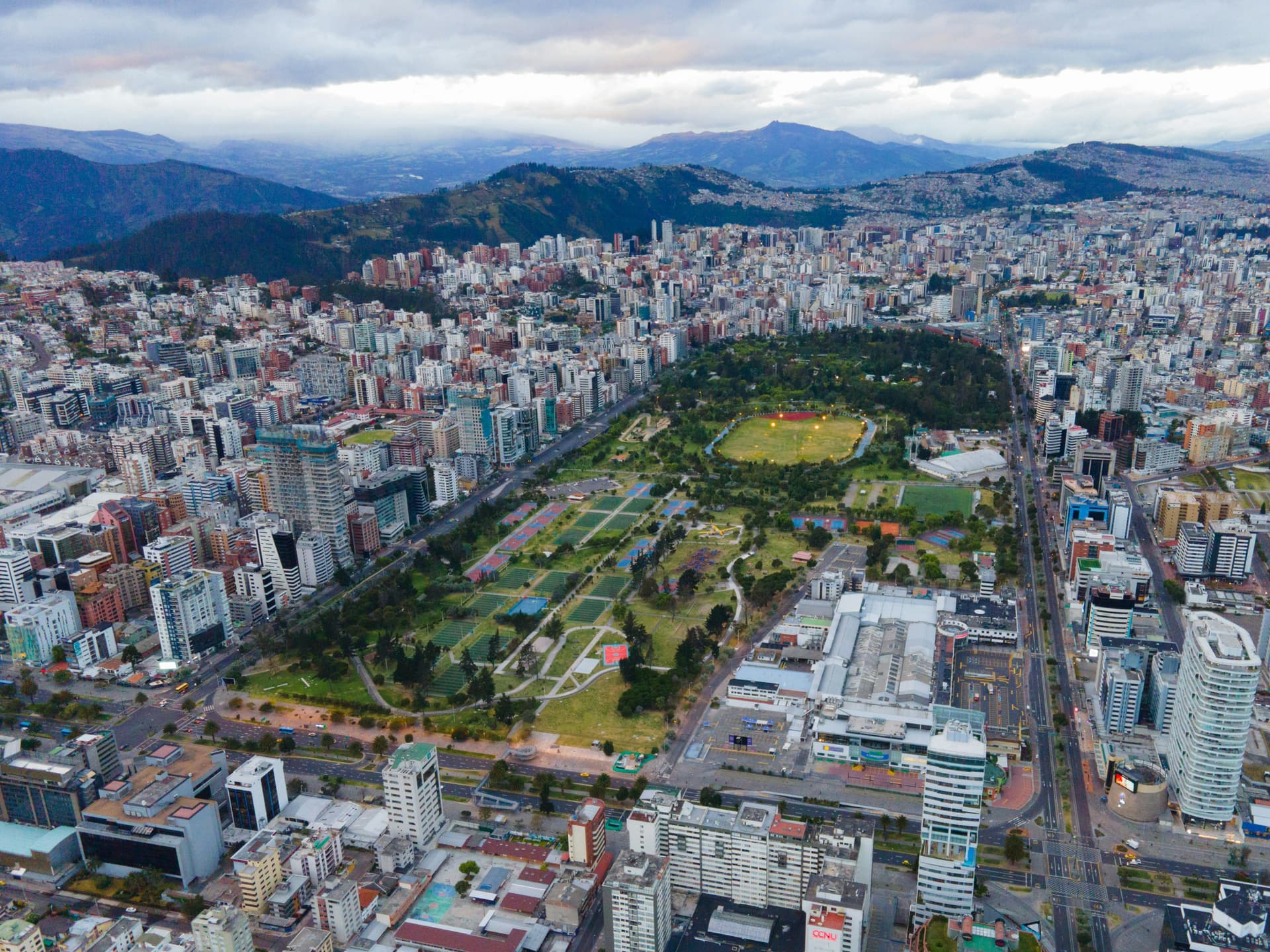
When world leaders gathered in Quito in 2016 to adopt the New Urban Agenda — the United Nations framework for sustainable urbanization — Latin America placed itself at the center of a global conversation about the future of cities. A decade later, that conversation has grown considerably more urgent.
A high-level meeting of the UN General Assembly convened to conduct a mid-term review of the Agenda's implementation delivered a sobering assessment: global progress has not kept pace with the pressures cities face. More than three billion people worldwide lack access to safe, adequate, and affordable housing. Over 330 million are homeless, and more than one billion live in informal settlements or slums. For South America — a region that has long grappled with rapid, often unplanned urbanization — these figures carry particular weight.
A Region Born Urban
Latin America is one of the most urbanized regions on the planet. Decades of rural-to-urban migration have produced sprawling metropolitan areas where opportunity and deprivation exist in sharp proximity. Cities like São Paulo, Buenos Aires, Bogotá, and Lima have grown at speeds that formal housing markets and public infrastructure have repeatedly failed to match. The result is a landscape of contrasts: gleaming financial districts ringed by vast informal settlements, known locally as favelas, villas miseria, or pueblos jóvenes.
The UN mid-term review confirmed what many urban planners and housing advocates in the region have long argued: urbanization itself is not the problem. Properly planned and managed, it can serve as one of humanity's most powerful tools for advancing prosperity, equity, and sustainability. The challenge is that its benefits remain distributed too unevenly — a reality South Americans experience daily.
The Promise and the Gap
The New Urban Agenda rests on a core conviction: that cities, if given sufficient power and resources, can deliver solutions to the overlapping crises of housing, climate, and inequality. Yet the review laid bare a persistent implementation gap. The central obstacle, as framed at the General Assembly, is no longer a lack of agreed vision for what cities should become — it is the failure to translate that vision into concrete action on the ground.
For South American governments, this gap manifests in several interconnected ways. Housing deficits are not simply a matter of units built or unbuilt; they reflect deeper structural issues including land tenure insecurity, inadequate access to basic services, weak municipal financing, and the chronic underfunding of social housing programs. In many countries across the region, a significant share of the urban population lives without legal title to the land they occupy, making investment in permanent, safe structures both risky and rare.
Climate Pressure and Urban Vulnerability
The housing crisis does not unfold in isolation. Across South America, climate change is reshaping the geography of urban risk. Informal settlements, often built on floodplains, steep hillsides, or other hazard-prone land because it is the only land accessible to the poor, face mounting threats from extreme weather events. Landslides in Colombia and Brazil, flooding in Paraguay and Bolivia, and coastal erosion threatening low-lying communities all disproportionately affect those in inadequate housing.
The UN review made explicit what climate-focused policymakers have argued for years: there can be no successful climate transition without successful urban transformation. For South America, this means that housing policy and climate adaptation cannot remain separate bureaucratic domains. Countries in the region that have begun integrating disaster risk management into urban planning frameworks represent early steps in the right direction, though financing constraints continue to slow implementation.
What Policy Can Do
The review's Political Declaration emphasized a balanced and integrated approach across the social, economic, and environmental dimensions of urban development — a framework that aligns with efforts already underway in parts of South America. Several countries have experimented with community-led upgrading programs that formalize land tenure and extend basic services to existing informal settlements rather than attempting wholesale relocation. Others have pursued public-private partnerships to expand affordable housing supply in peri-urban areas.
Municipal governments have emerged as critical actors. The UN review stressed that cities need genuine power and adequate resources to deliver — a message directly relevant to South America's highly centralized political systems, where municipal governments often lack the fiscal authority or administrative capacity to act at the scale the crisis demands. Decentralization of housing policy, paired with technical assistance and dedicated financing mechanisms, represents one of the more promising pathways forward.
A Decade to Deliver
The mid-term review stops short of declaring the New Urban Agenda a failure. Rather, it frames the coming decade as a distinct opportunity to adapt the Agenda's vision to present realities and to finally match political commitments with investment. For South America, where the urban share of the population is already high and continuing to grow, the window for course correction is narrowing.
The Agenda was born in Quito. Whether its promises are kept may well be determined in the favelas, comunas, and asentamientos informales that stretch across the continent's cities — communities that have waited long enough for the cities they call home to love them back.
Source: original article
This article was compiled with the support of advanced research technology, based on multiple verified sources, and reviewed by our editorial team.