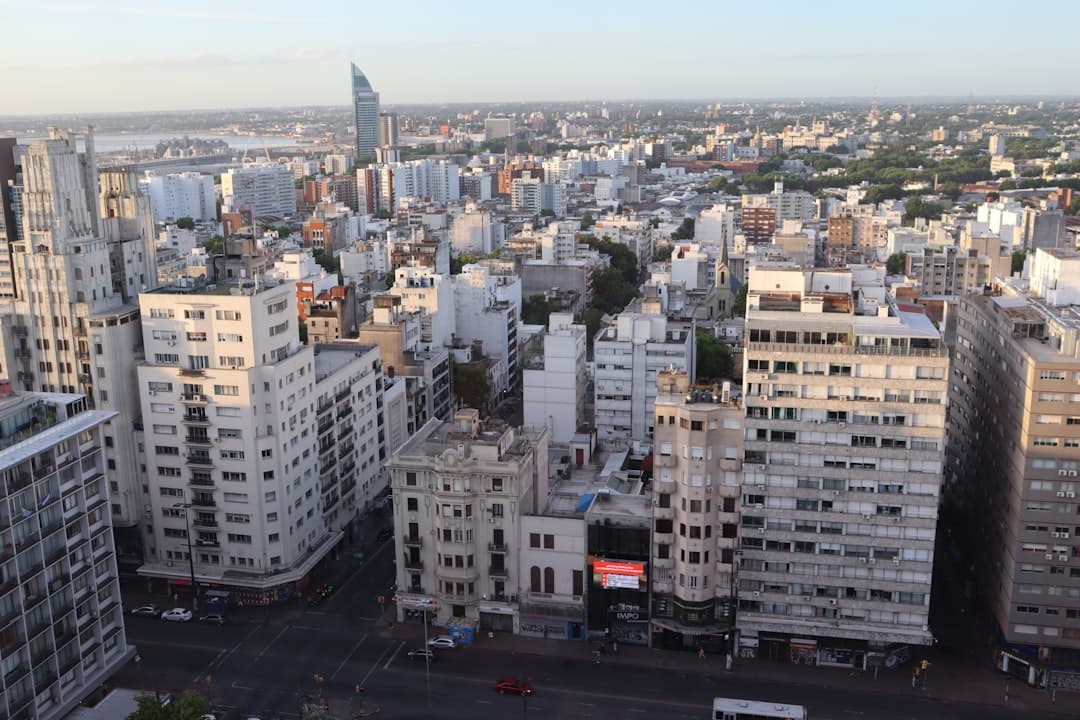
Montevideo sits on the northern shore of the Río de la Plata estuary, serving as Uruguay's political, economic, and cultural hub. With a metropolitan population that represents roughly half of Uruguay's total inhabitants, the city carries an outsized national significance while maintaining the unhurried pace that distinguishes it from larger regional capitals such as Buenos Aires and São Paulo.
Neighborhoods Worth Exploring
The Ciudad Vieja, or Old City, forms the historic core of Montevideo. Its grid of narrow streets contains colonial-era buildings, the neo-classical Teatro Solís, and the Mercado del Puerto — a 19th-century iron market hall where parrilla grills operate throughout the week. The Pocitos and Punta Carretas neighborhoods, located along the Rambla coastal boulevard, attract residents and visitors seeking waterfront walks, cafés, and access to urban beaches.
The Rambla itself stretches for approximately 22 kilometers along the River Plate shoreline, making it one of the longest continuous waterfront promenades in South America and a defining feature of daily life in the city.
Getting Around
Montevideo is served by Carrasco International Airport, located east of the city center. Public buses, known locally as ómnibus, cover most urban and suburban routes. Taxis and ride-hailing applications operate throughout the metropolitan area. The city center is compact enough to navigate on foot for shorter distances.
Culture and Rhythms
Montevideo has a strong carnival tradition, recognized as one of the longest carnival celebrations in the world. Candombe — an Afro-Uruguayan drum-based musical tradition — is a UNESCO-recognized element of the city's intangible cultural heritage. The annual Desfile de Llamadas parade through the Palermo and Sur neighborhoods draws large crowds each February.
Climate and Timing
The city experiences a temperate climate with four distinct seasons. Southern Hemisphere summer runs from December through February, offering warm temperatures suited to beach visits along the Rambla. Winter months, June through August, bring cooler and occasionally wet conditions but significantly fewer tourists.
Remaining Questions
Ongoing urban development projects along the waterfront and the expansion of Carrasco Airport raise questions about how Montevideo's infrastructure will adapt to increasing regional tourism demand in the coming years.
Sources: UNESCO Intangible Cultural Heritage Lists; Aeropuertos Uruguay (Carrasco International Airport); Intendencia de Montevideo (Municipal Government); Mercado del Puerto historical records.
This article was prepared using multiple verified sources and editorial research. The content was reviewed, fact-checked and approved by our editorial team prior to publication.