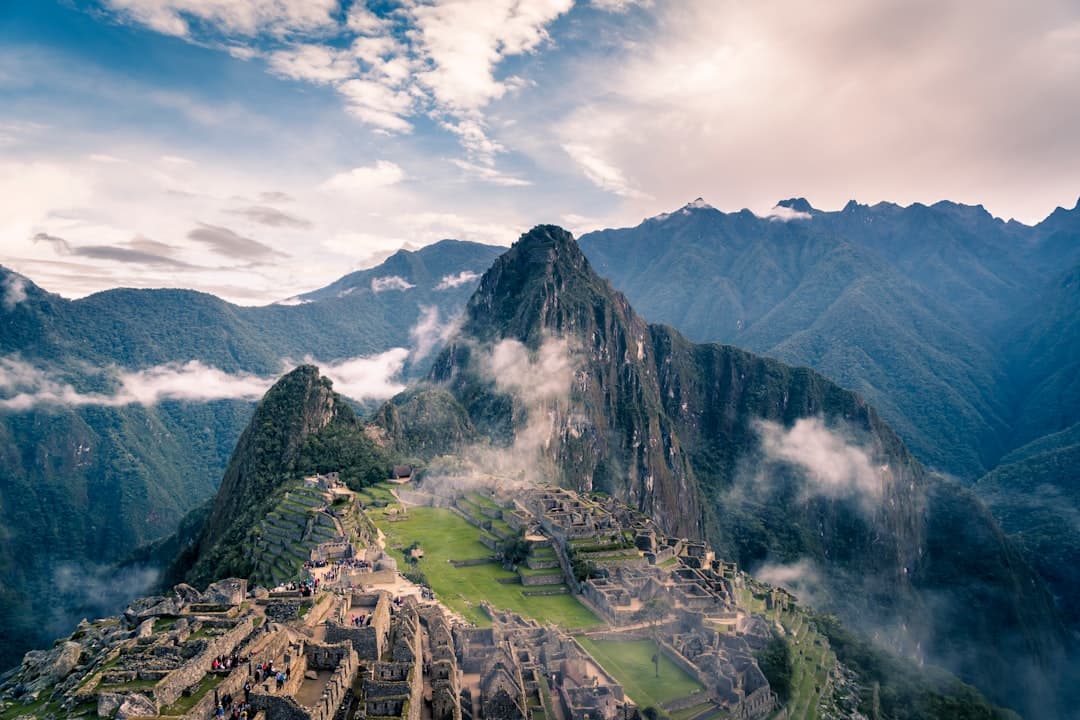
Located in the Arequipa region of southern Peru, Colca Canyon cuts dramatically through the Andes at depths that surpass those of the Grand Canyon in the United States. The canyon stretches for roughly 100 kilometers and reaches depths of more than 3,000 meters in certain sections, making it one of the deepest terrestrial gorges recorded worldwide.
A Destination Built on Landscape and Culture
The canyon sits at high altitude, with the town of Chivay serving as the primary gateway for visitors arriving from Arequipa. From Chivay, a road winds along the canyon rim through a series of traditional villages, many of which retain pre-Inca agricultural terracing still in active use. The terraces, known locally as andenes, represent one of the more visible continuities of ancient Andean agricultural practice in the region.
The village of Yanque and the Cruz del Cóndor viewpoint are among the most frequently visited stops along the canyon route. The Cruz del Cóndor, positioned at a dramatic overlook, is recognized as one of the most reliable locations in South America to observe Andean condors in flight. The birds, which carry the largest wingspan of any land bird in the Western Hemisphere, use thermal updrafts rising from the canyon floor to soar at close range to the viewpoint.
Trekking and Access
Multi-day trekking routes descend into the canyon floor, passing through the oasis settlement of Sangalle before ascending back to the rim. The trek is considered moderately demanding due to altitude and steep terrain. Guided services operate out of Chivay and Arequipa, and independent trekking remains possible for experienced hikers familiar with high-altitude conditions.
The nearest major city, Arequipa, is connected to the canyon by paved road and offers frequent bus and organized tour departures. Arequipa itself is a UNESCO World Heritage Site, and many travelers combine both destinations in a single trip through the southern Peruvian highlands.
Conservation and Community
The area falls within the Colca y Volcanes de Andagua Reserve. Local communities participate in tourism services, including accommodation, guiding, and the sale of traditional textiles. The Collagua and Cabana peoples have maintained a presence in the canyon for centuries, and their cultural traditions remain an active part of the visitor experience.
Remaining Questions
How tourism growth is affecting the long-term preservation of the ancient andenes terrace systems remains an open area of study. The carrying capacity of multi-day trekking routes through the canyon floor has not been publicly established by Peruvian authorities.
Sources: Peru Ministry of Culture, UNESCO World Heritage Centre, Peruvian Sernanp (National Service of Natural Protected Areas), Arequipa Regional Government tourism publications.
This article was prepared using multiple verified sources and editorial research. The content was reviewed, fact-checked and approved by our editorial team prior to publication.