Panama's Afro-descendant population forms one of the most historically significant communities in Central America, with roots tracing back to the earliest decades of Spanish colonization in the sixteenth century. Over subsequent centuries, additional waves of African and Afro-Caribbean migration — most notably during the construction of the Panama Railroad in the mid-1800s and the Panama Canal in the early twentieth century — further deepened the community's demographic and cultural presence.
Two Distinct Communities
Scholars and Panamanian institutions broadly recognize two major Afro-Panamanian groups. The first, known as Afro-Colonials or "Afro-Coloniales," descends from Africans brought to the isthmus during the colonial era. The second group, often called Afro-Antilleans or "Afro-Antillanos," traces its lineage primarily to English-speaking Caribbean islands, particularly Barbados and Jamaica, from which large numbers of workers emigrated to support major infrastructure projects.
Cultural Expressions
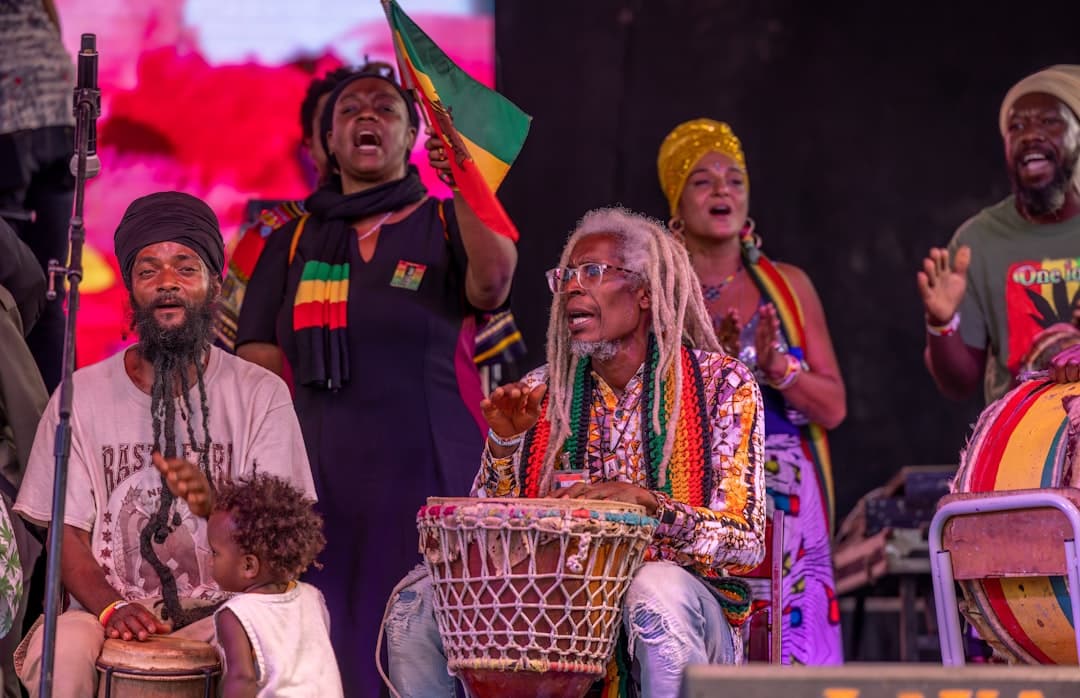
Music and dance stand among the most visible cultural contributions of Afro-Panamanian communities. The congo tradition — a form of song, dance, and theatrical performance originating among maroon communities on Panama's Atlantic coast — has been recognized by UNESCO as an Intangible Cultural Heritage of Humanity. The tamborito, Panama's national dance, also carries strong African rhythmic and percussive influences. Religious syncretism, blending Catholic traditions with African spiritual practices, remains present in several communities along the Caribbean coast.
Cuisine and Everyday Life
Afro-Panamanian culinary traditions have shaped the broader national cuisine. Dishes featuring coconut rice, plantains, seafood, and root vegetables reflect West African and Caribbean cooking techniques that have been passed down across generations and widely adopted throughout Panama.
Civic Recognition
Panama officially recognizes May 30 as Día de la Etnia Negra Nacional, a national day honoring Afro-Panamanian heritage. The date commemorates the arrival of one of the earliest recorded groups of African-descended people on the isthmus. Government agencies, universities, and civil society organizations use the occasion to promote research, public education, and cultural programming related to the community's history.
Remaining Questions
The extent to which Afro-Panamanian cultural practices are being transmitted to younger urban generations, and how digital media may be reshaping that transmission, remains an open area of study for ethnographers and sociologists working in the region.
Sources: UNESCO Intangible Cultural Heritage Lists; Smithsonian Tropical Research Institute publications; Panama's National Institute of Culture (INAC); Library of Congress Country Studies — Panama.
This article was prepared using multiple verified sources and editorial research. The content was reviewed, fact-checked and approved by our editorial team prior to publication.