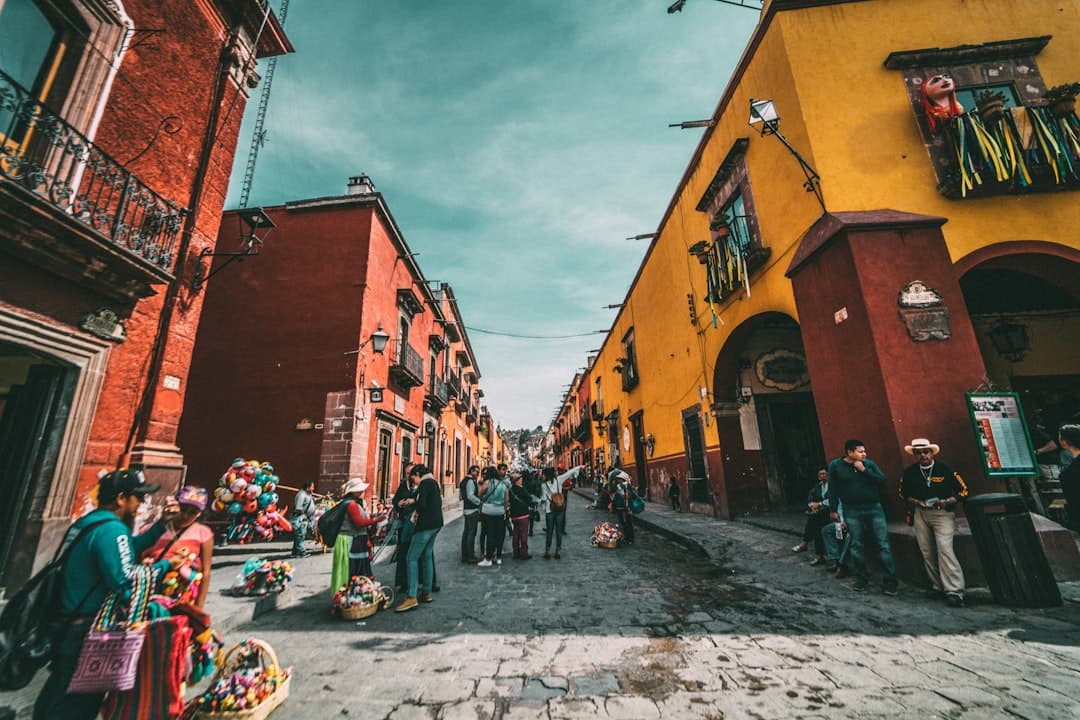
Mexico holds a prominent place among the world's most culturally rich nations, with a heritage that spans thousands of years and encompasses dozens of distinct indigenous civilizations. From the monumental pyramids of Teotihuacan to the elaborate textile traditions of Oaxacan communities, the country's cultural expression operates across multiple layers of history and geography.
A UNESCO Presence Among the World's Largest
Mexico ranks among the top countries globally for the number of UNESCO World Heritage Sites, encompassing archaeological zones, colonial city centers, and natural landscapes. Sites such as the historic center of Mexico City, the ancient Mayan city of Chichen Itza, and the pre-Hispanic town of Uxmal represent the breadth of architectural and ceremonial traditions preserved across the territory.
Living Languages and Indigenous Communities
The country recognizes significantly more than sixty indigenous languages as national languages alongside Spanish, reflecting a constitutional commitment to linguistic diversity. Communities speaking Nahuatl, Zapotec, Maya, and Mixtec, among others, maintain oral traditions, agricultural calendars, and ritual practices that predate European contact by centuries.
Intangible Heritage and Ceremonial Life
UNESCO has also recognized several of Mexico's intangible cultural practices. The Day of the Dead, or Día de los Muertos, a syncretic observance blending pre-Hispanic and Catholic traditions, holds a place on the UNESCO Representative List of the Intangible Cultural Heritage of Humanity. Mariachi music and the traditional cuisine of Michoacán have received similar recognition, underscoring the diversity of Mexico's living cultural forms.
Cultural Diplomacy and Regional Influence
Mexican cultural institutions, including the National Institute of Anthropology and History, work alongside international bodies to document, preserve, and promote the country's heritage. Mexico's cultural influence extends broadly across Latin America and into diaspora communities worldwide, reinforcing its role as a major reference point for regional identity and shared historical memory.
Open Questions
How are indigenous communities balancing the pressures of tourism development with the preservation of ceremonial and linguistic traditions? What mechanisms exist to ensure that cultural recognition translates into tangible economic and social benefits for origin communities?
Sources: UNESCO World Heritage Centre (whc.unesco.org), Instituto Nacional de Antropología e Historia (inah.gob.mx), UNESCO Intangible Cultural Heritage Lists (ich.unesco.org)
This article was compiled with the support of advanced research technology, based on multiple verified sources, and reviewed by our editorial team.